
Two sisters that have been my friends for many years have been talking about going on a trip with me for forever. We finally did it!
Museum Hill
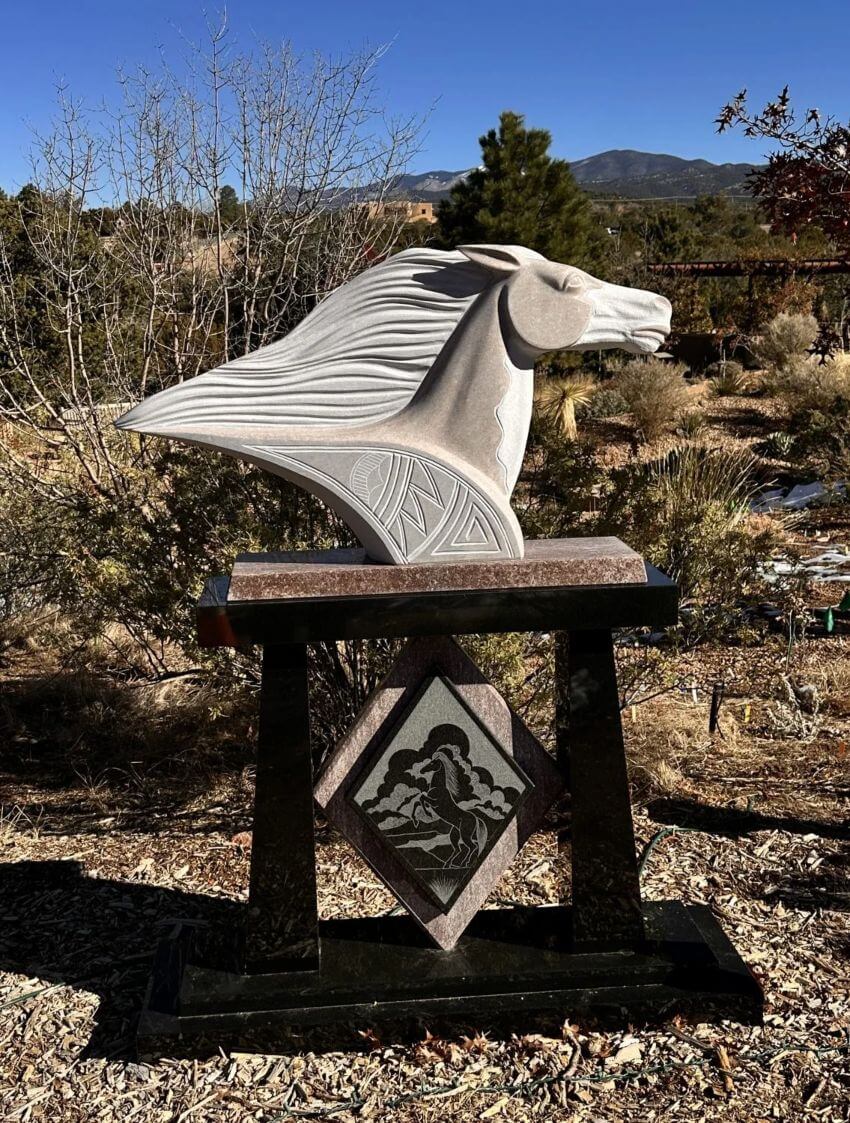
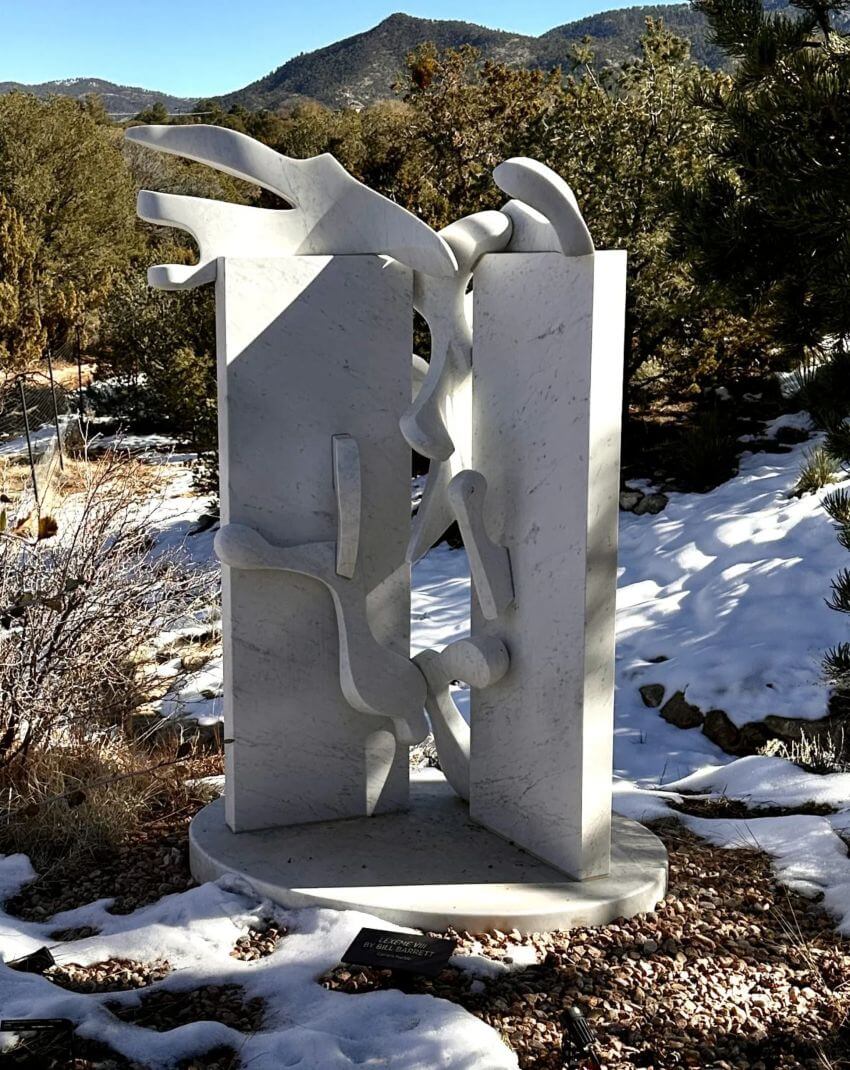
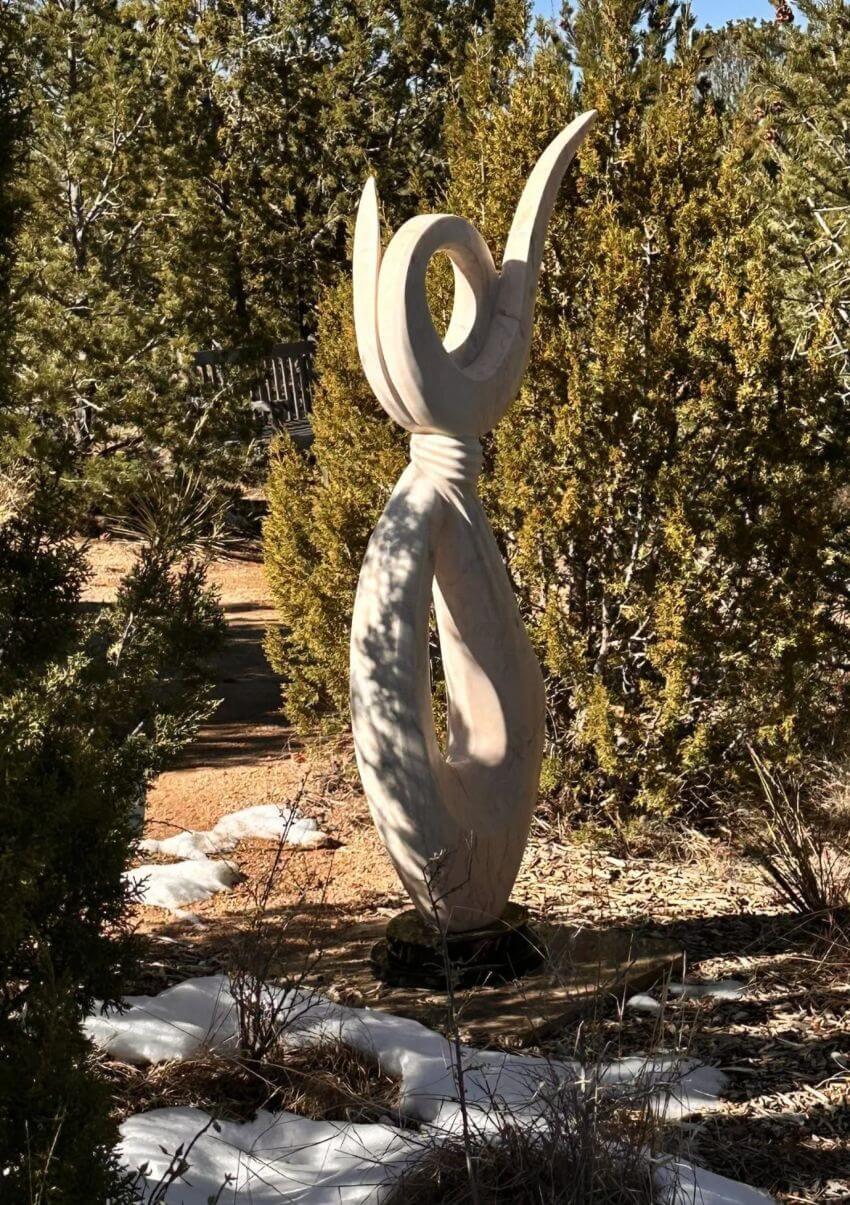
We flew into Albuquerque and rented a car and drove to Santa Fe. Our day started with The Botanical Garden on Museum Hill, while not in bloom the garden is full of sculpture. There is a lot of sculpture all over town.
Right across the street is the Museum of International Folk Art. This place blew me away. While I don’t necessarily collect folk art I love looking at it.


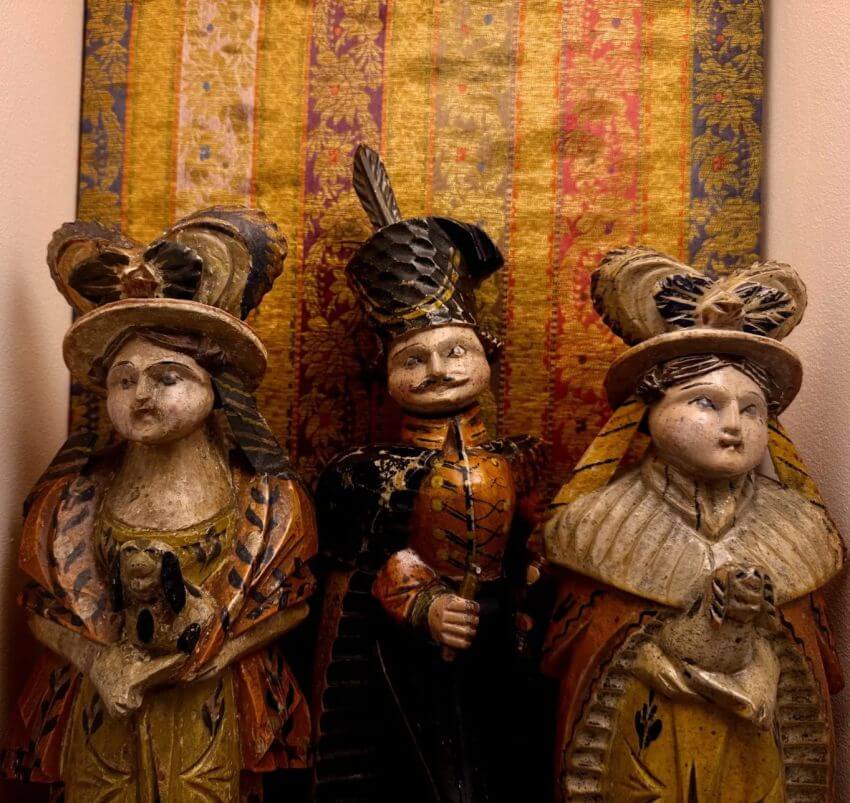
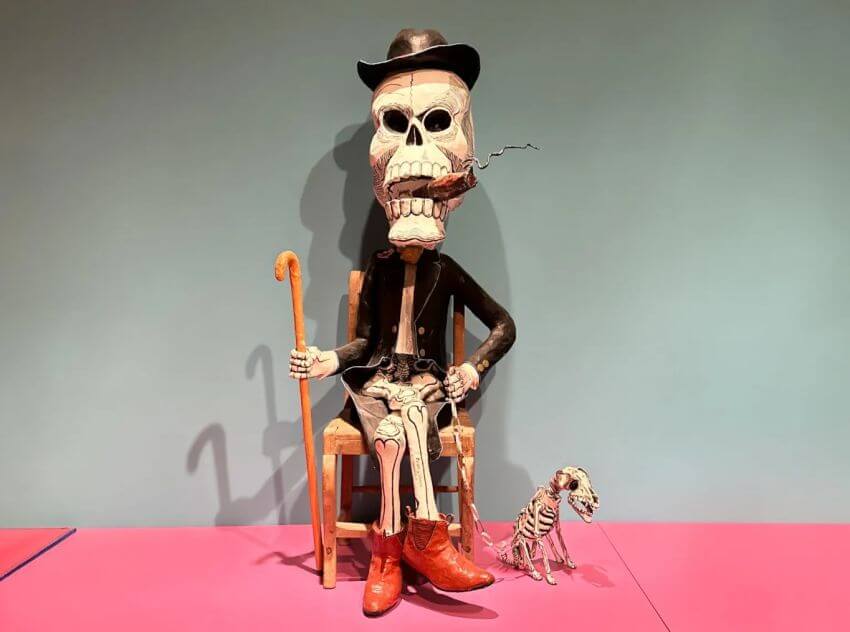
The museum’s holdings represent diverse cultures and is the largest collection of international folk art in the world. The core collection was donated by museum founder Florence Dibell Bartlett and represents 34 countries. It has since grown to a collection of over 130,000 objects from more than 100 countries.
They had everything from pottery, to buttons, to clothing, baskets, hats, you name it. I was particularly drawn to the sculptures called Santos which we saw more of as we headed to Taos.
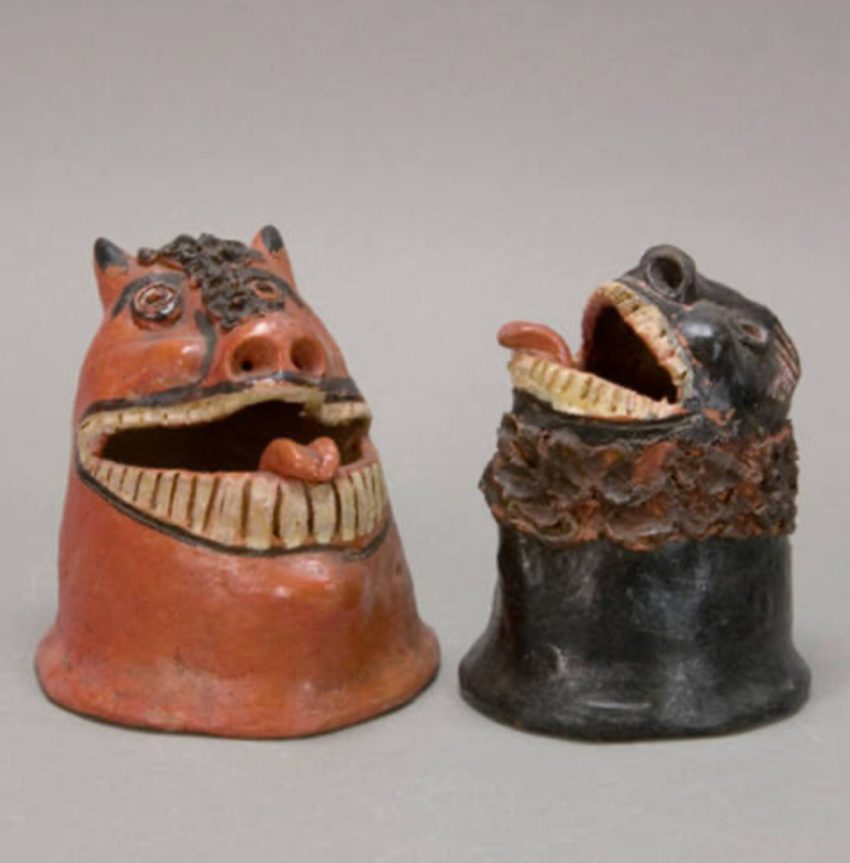
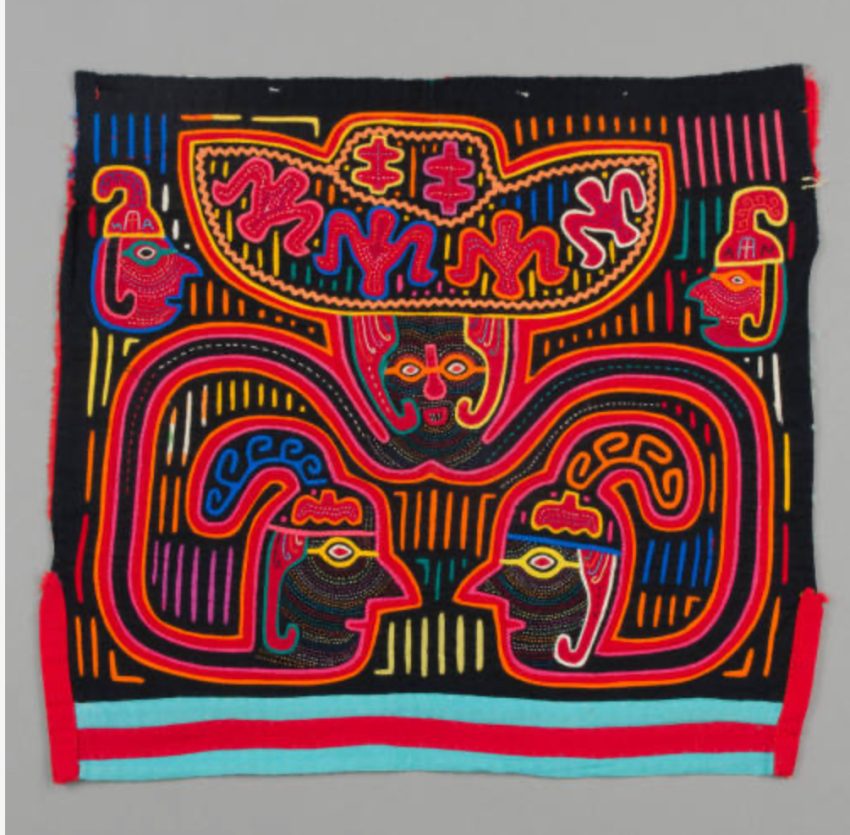
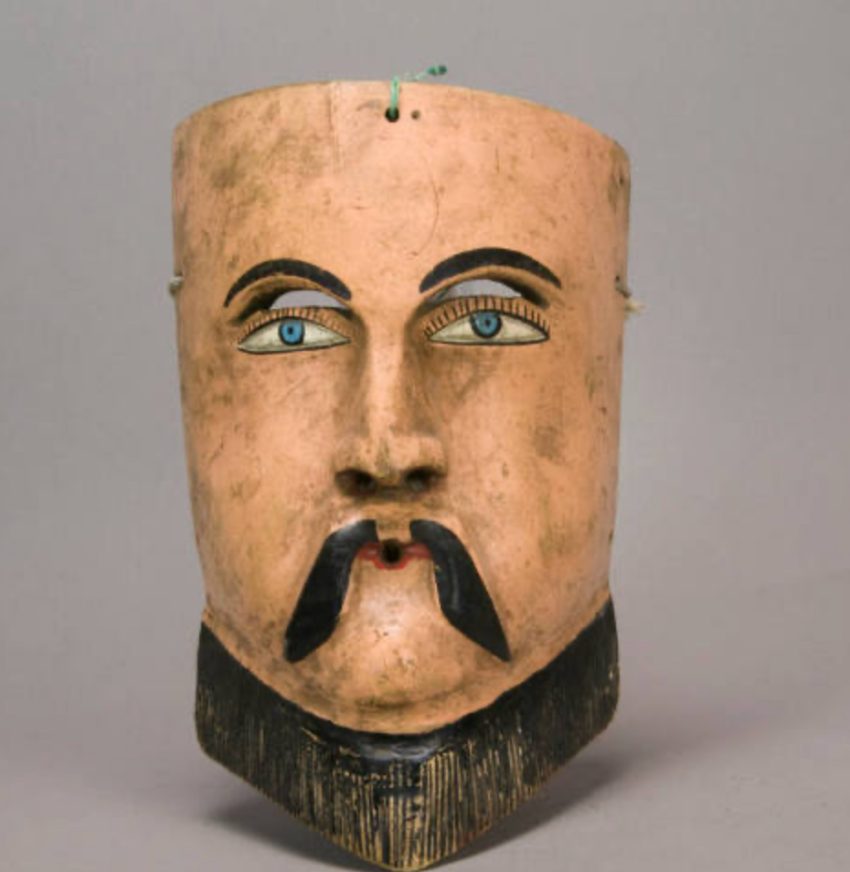
The other museums on Museum Hill are Museum of Indian Arts and Culture, New Mexico History Museum, and Wheelwright Museum of the American Indian. I’ll have to visit those on my next trip.
Canyon Road
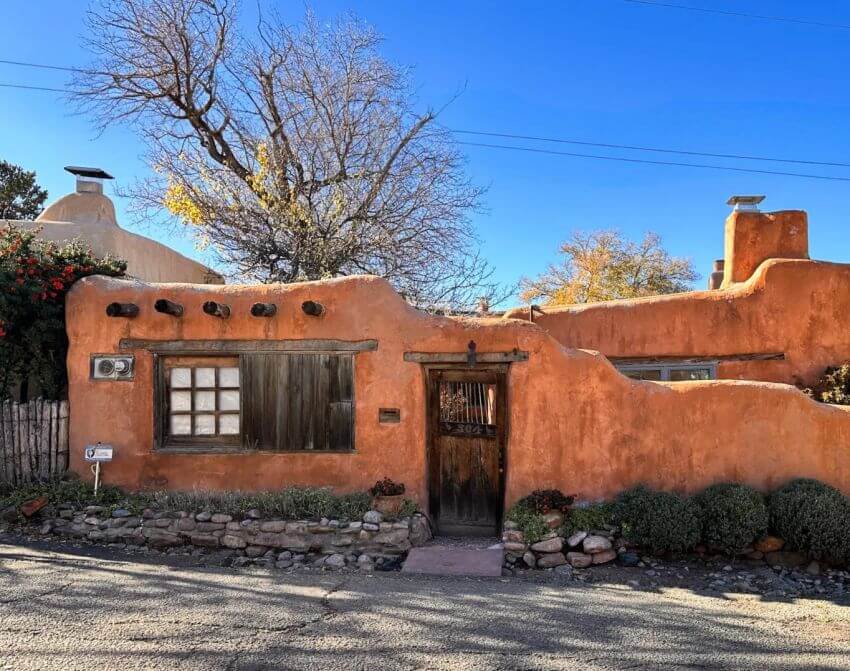
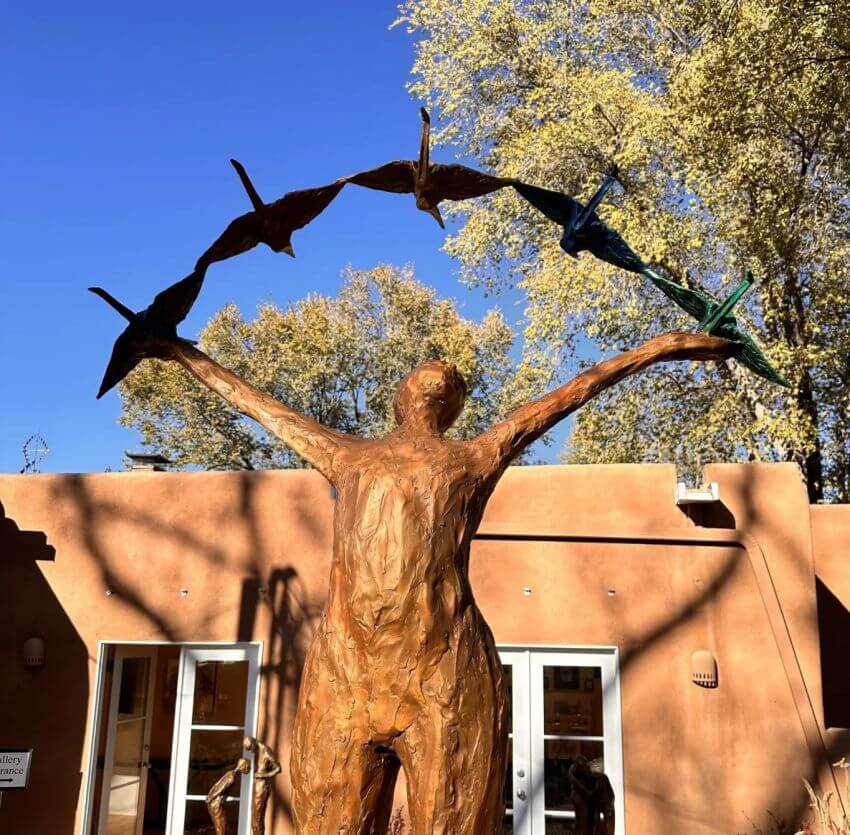
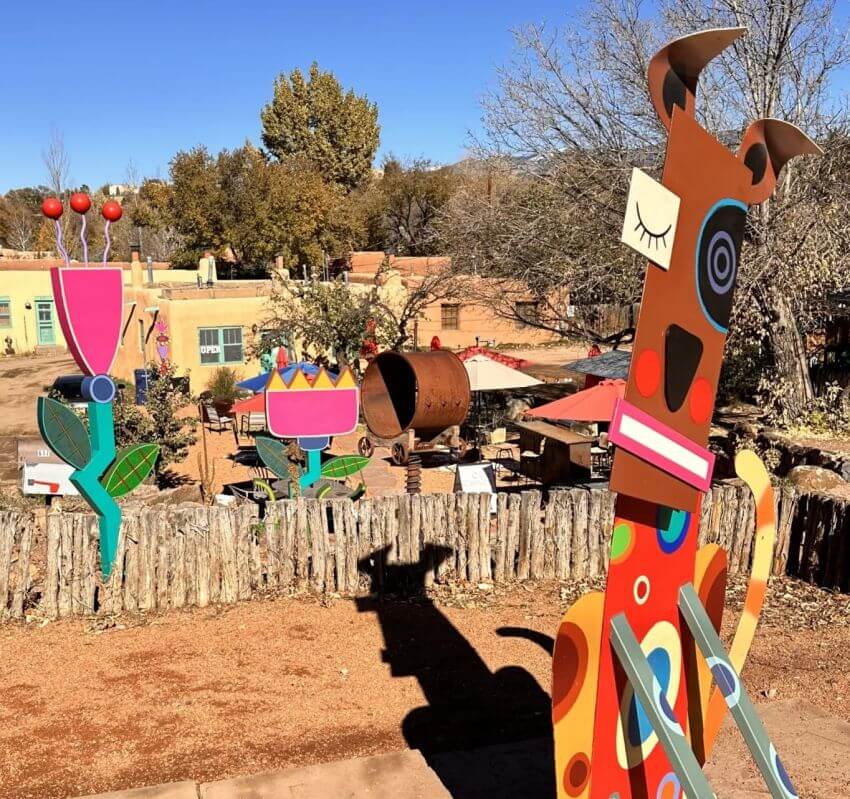
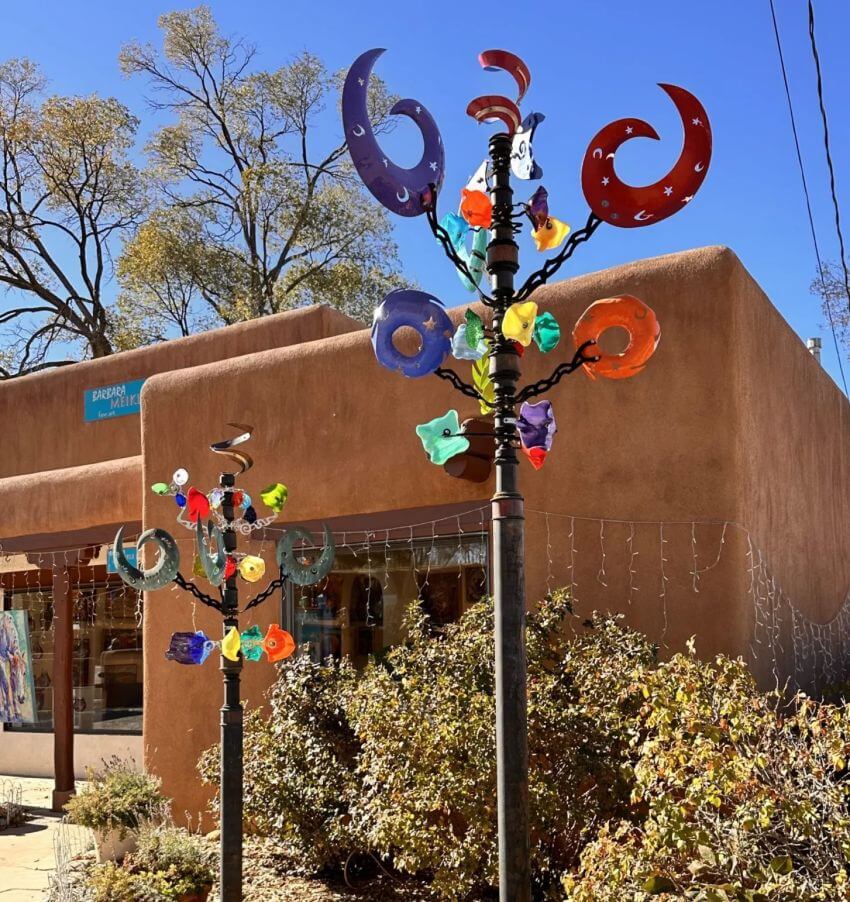
That afternoon was spent on Canyon Road visiting the mostly contemporary galleries there. We only hit about half of them that day. You could easily spend all day, maybe even two visiting them all. This was my second visit, and I’m sure I have not been in all of them.
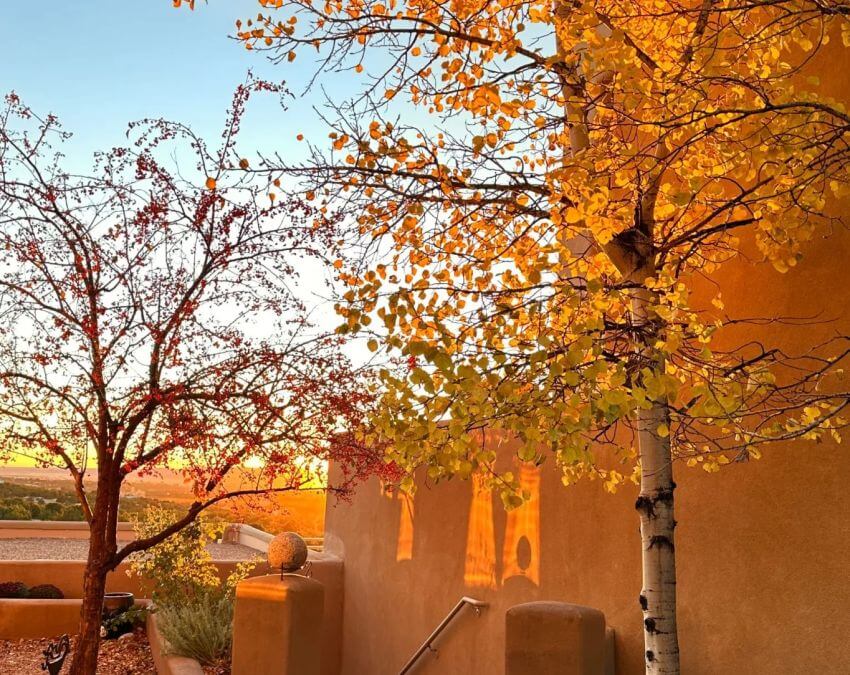
We stopped to see old friends that owned a gallery in Pennsylvania at the same time I owned Carolina Creations. Through the years we visited each other, met at shows, shared resources and our love of art and craft. We got to their house just in time for sunset. What a beautiful view.
Georgia O’Keefe
She first visited the village of Abiquiú in 1917, and twenty years later made it her permanent home. It is 60 miles northwest of Santa Fe.
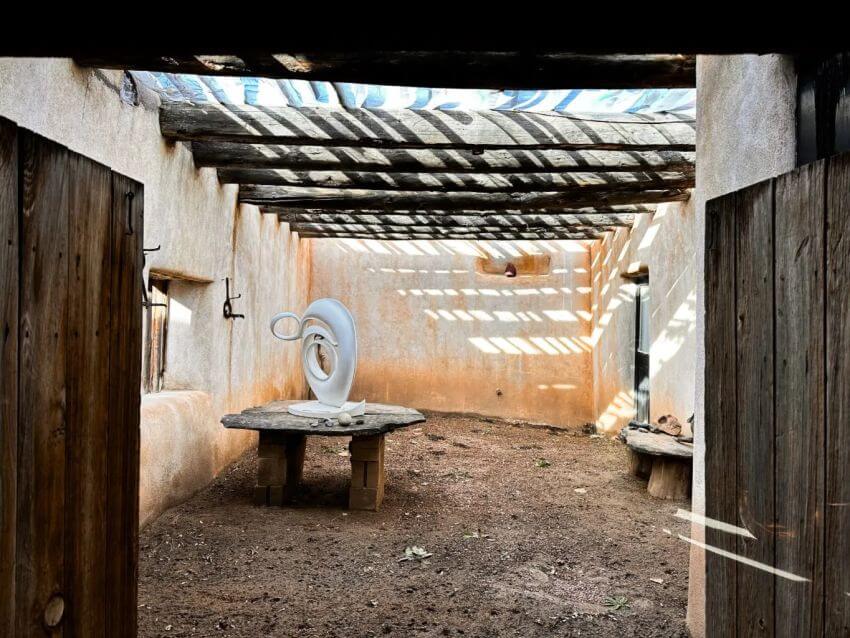
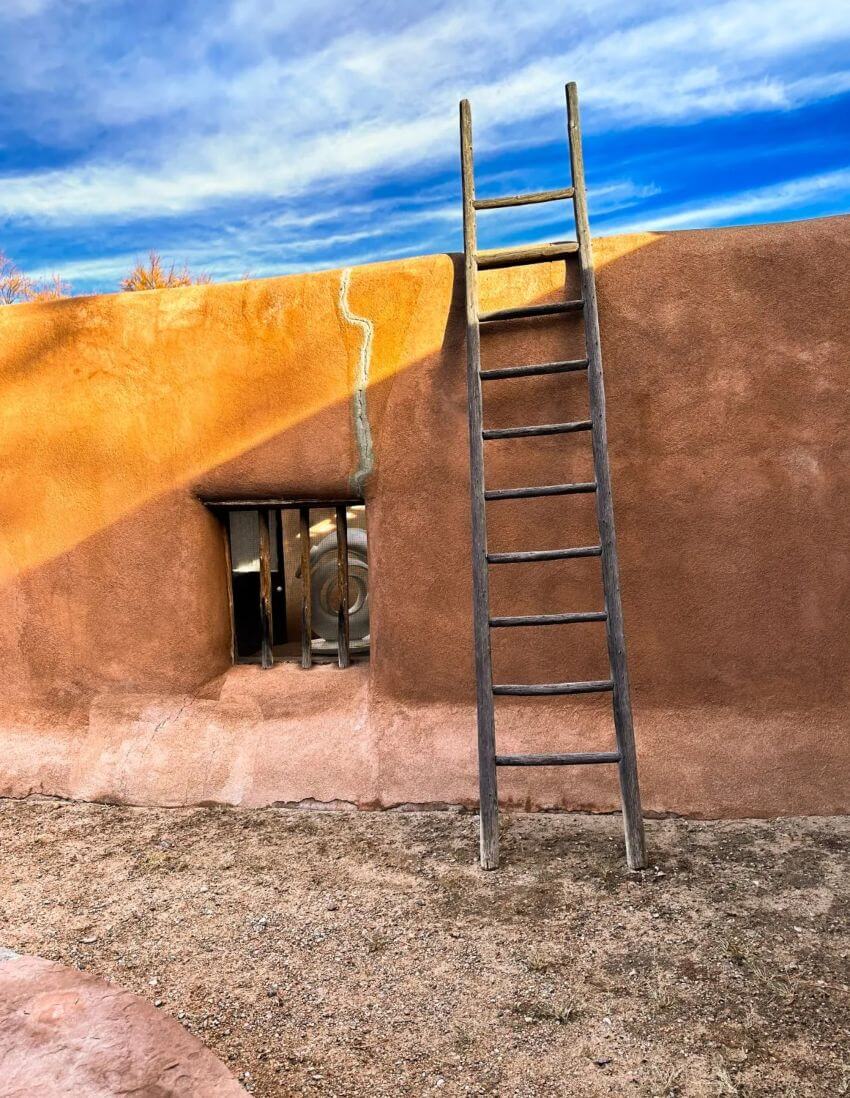
I’ve know her work and a little of her history in Ny, when she was married to Stieglitz, and her fearless traveling cross country. But for some reason I did not know she had two homes only 20 miles from one another.
Why would she have them so close? Well, after you see how remote Ghost Ranch is you can see why she would move closer to other people in the winter. To think she lived out there before there were even roads is amazing.
Our guide said she was afraid every day of her life but powered on. I like that. I’m afraid a lot too, but I don’t let it slow me down.


The oldest rooms of the Abiquiu house were probably built in 1744. The house was expanded in the 19th century into a pueblo-style adobe (mud brick) hacienda, with rooms organized around a plazuela.
The 5,000 sq compound was in ruins when she purchased it, and she spent the next four years restoring it.
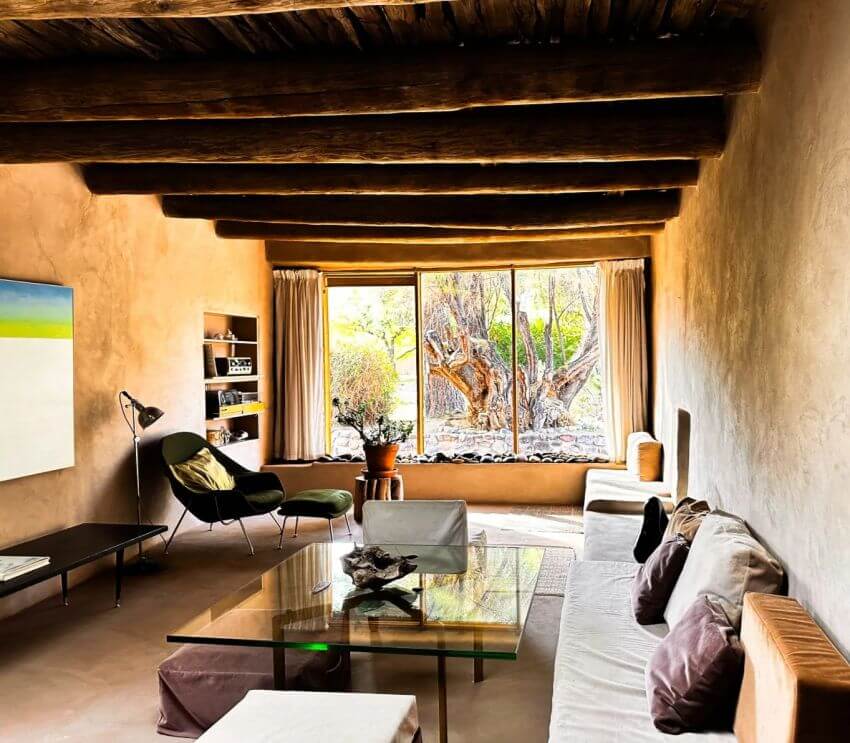
O’Keeffe lived in the home from 1949 until 1984. She died in Santa Fe on March 6, 1986, at the age of 98.
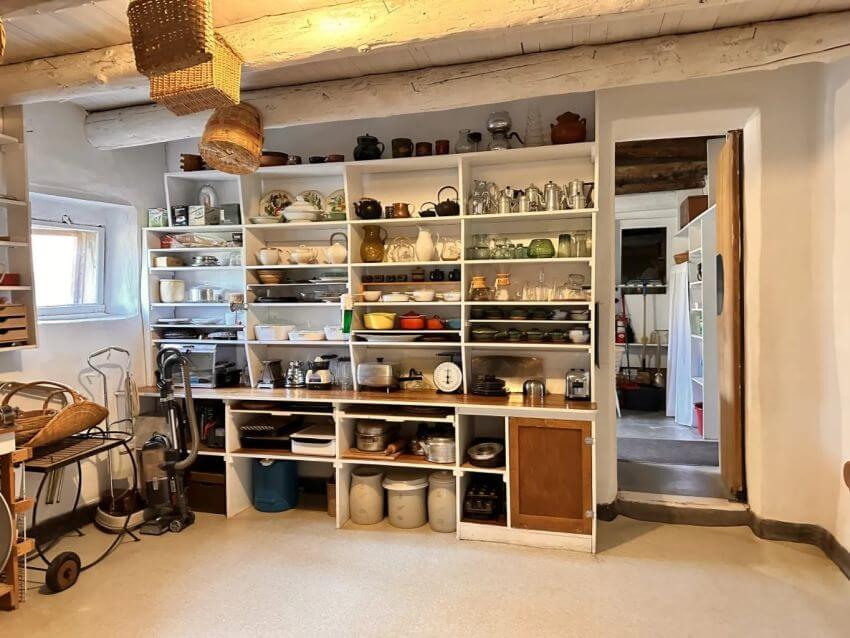
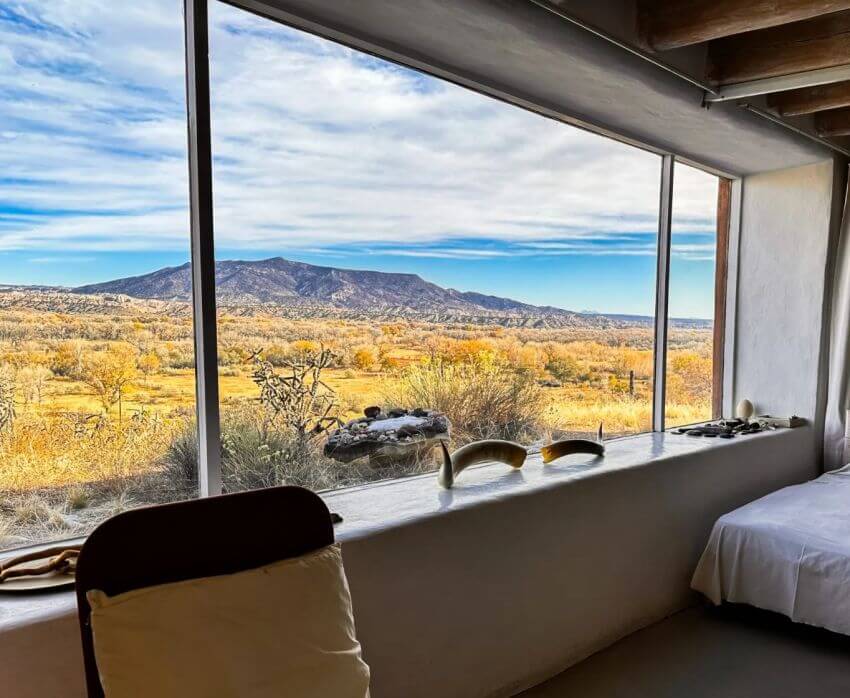
The entire place is amazing but her bedroom and studio have views that go forever.
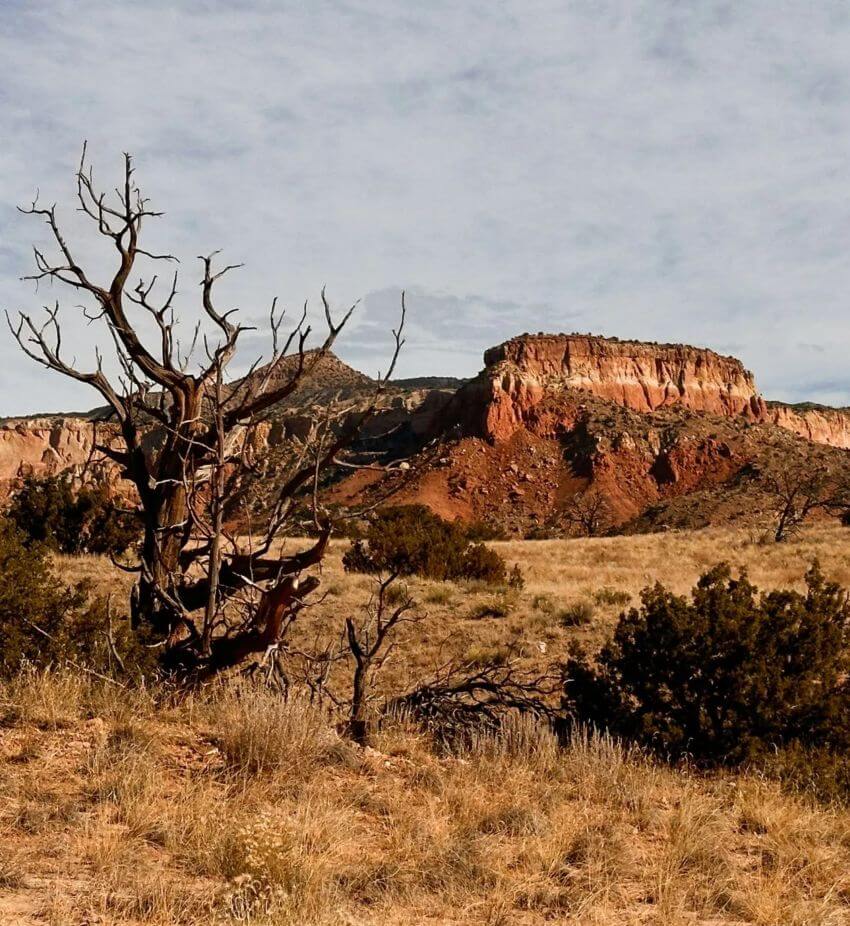
From there we drove up to Ghost Ranch. It is interesting how the geography changes in such a short distance.
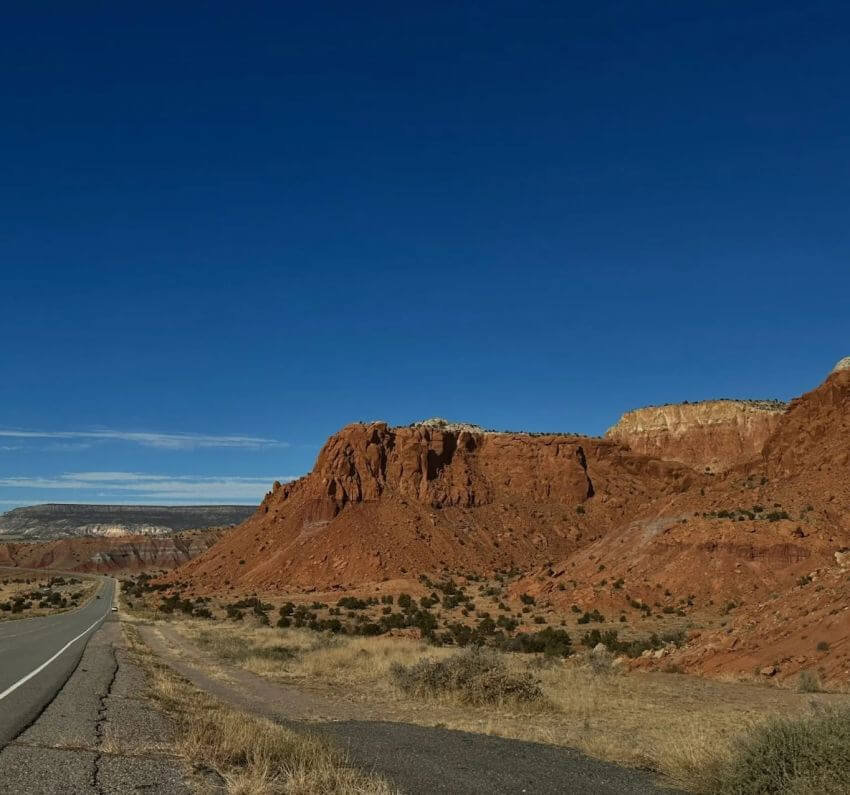
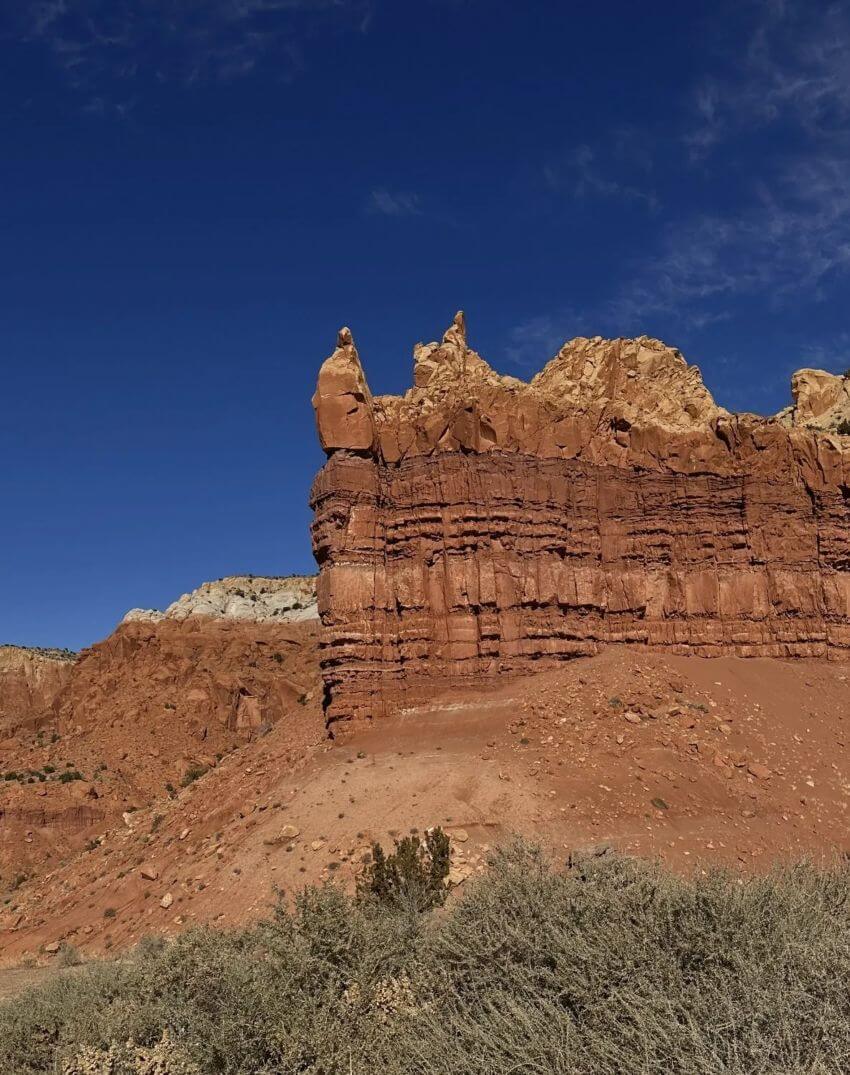
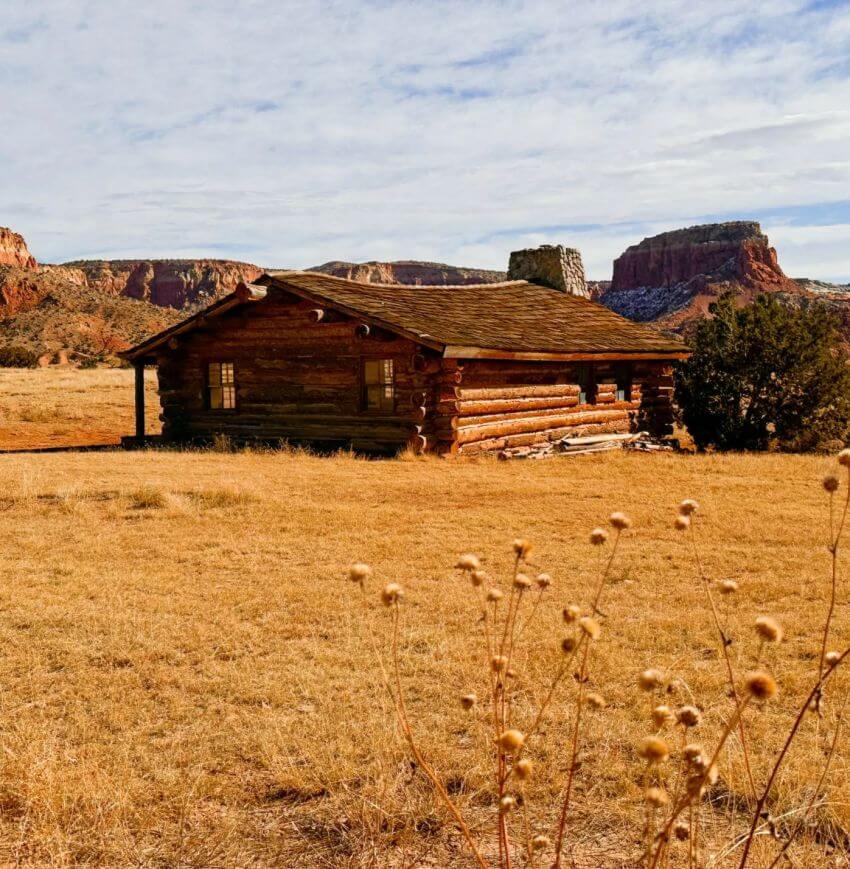
Her summer house, twelve miles from Abiquiú, sits on 12 acres at the edge of Ghost Ranch. When she purchased it in 1940, Ghost Ranch was a dude ranch, now it is a retreat center operated by the Presbyterian Church.
Both houses are owned by the Georgia O’Keeffe Museum, but only the Abiquiú Home and Studio is open for public tours.
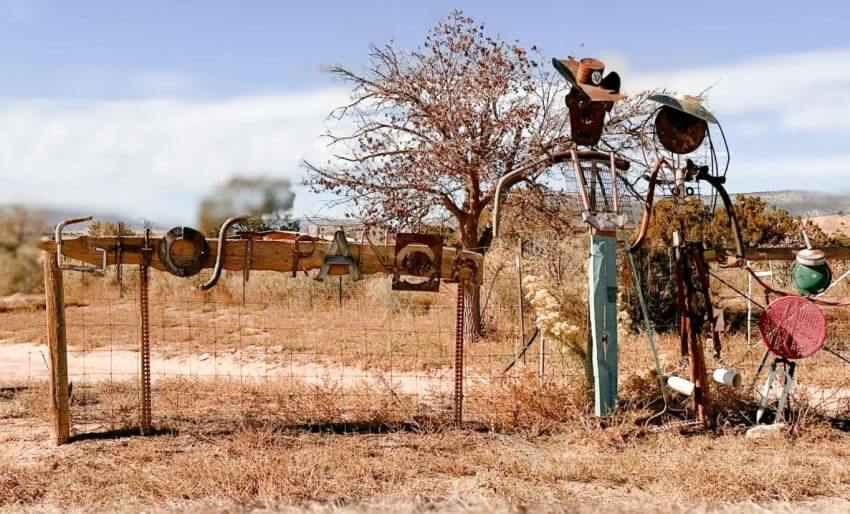
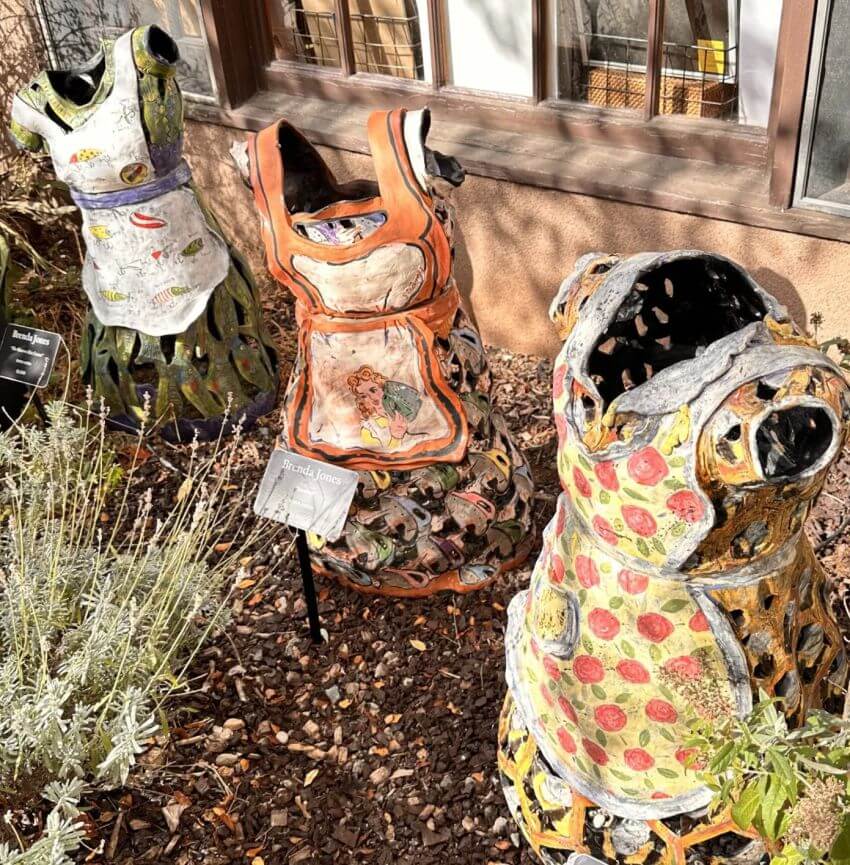
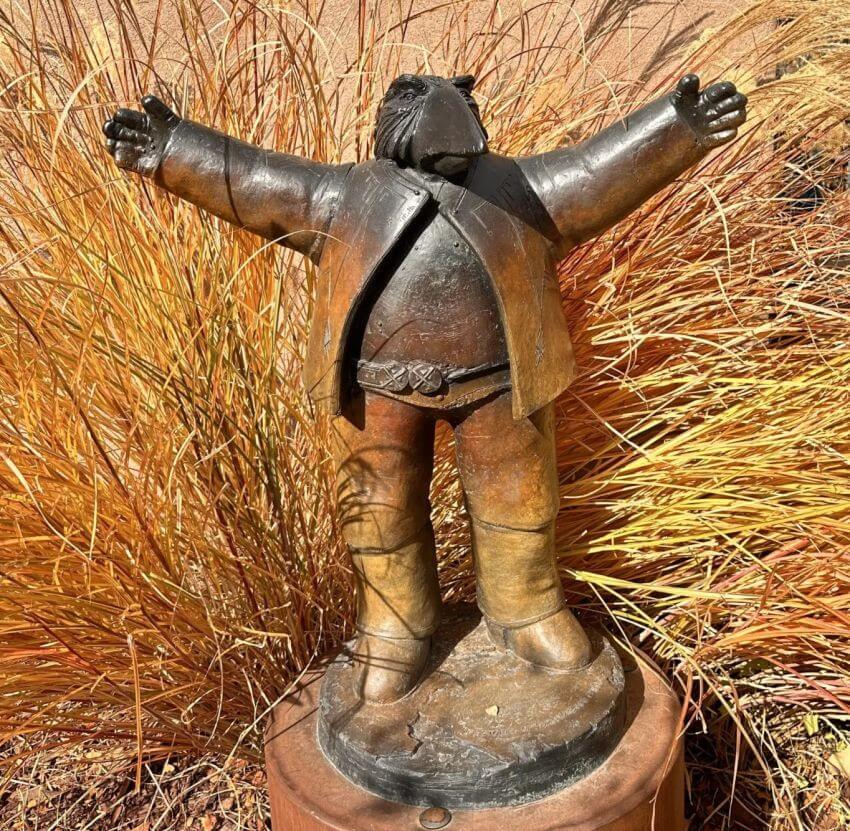
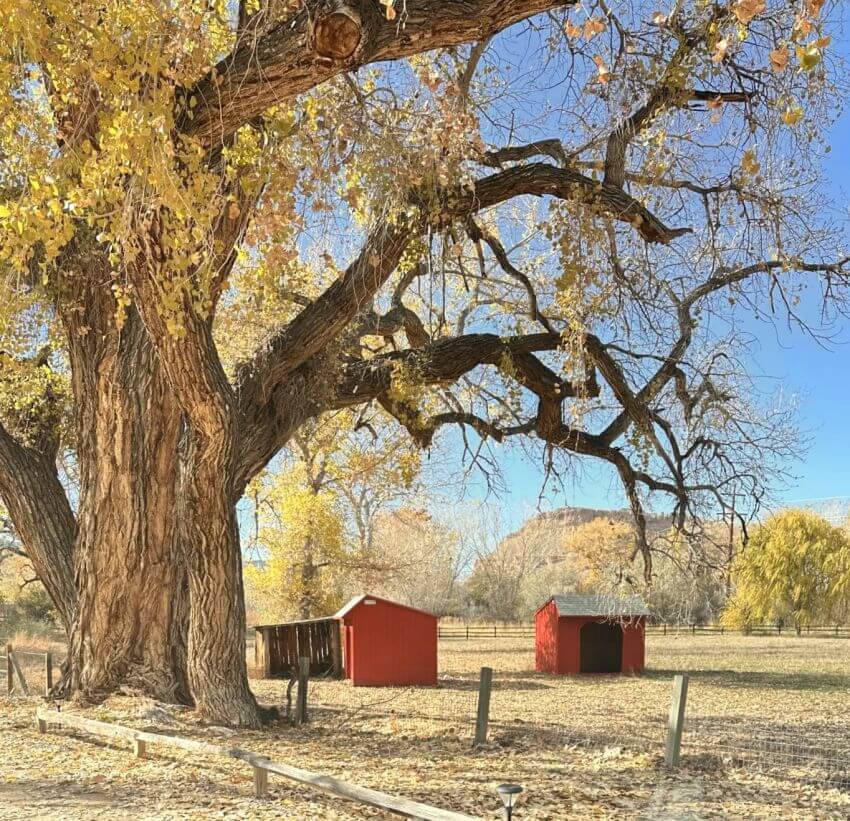
We drove back down to the Visitors Center at Abiquiú. There is a beautiful gallery right next door, a restaurant, and a hotel with cottages. A sculpture garden winds around the property.

Puya Cliff Dwellings
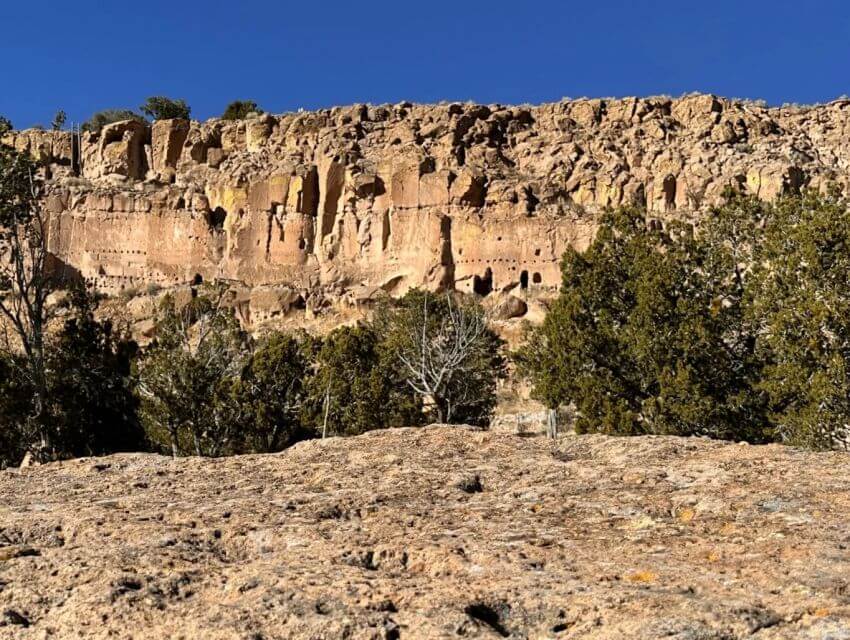
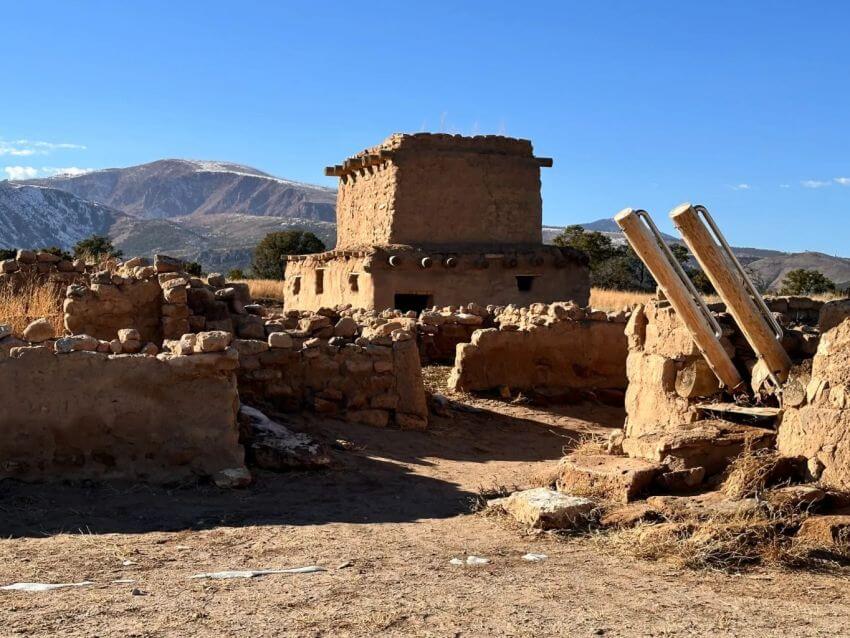
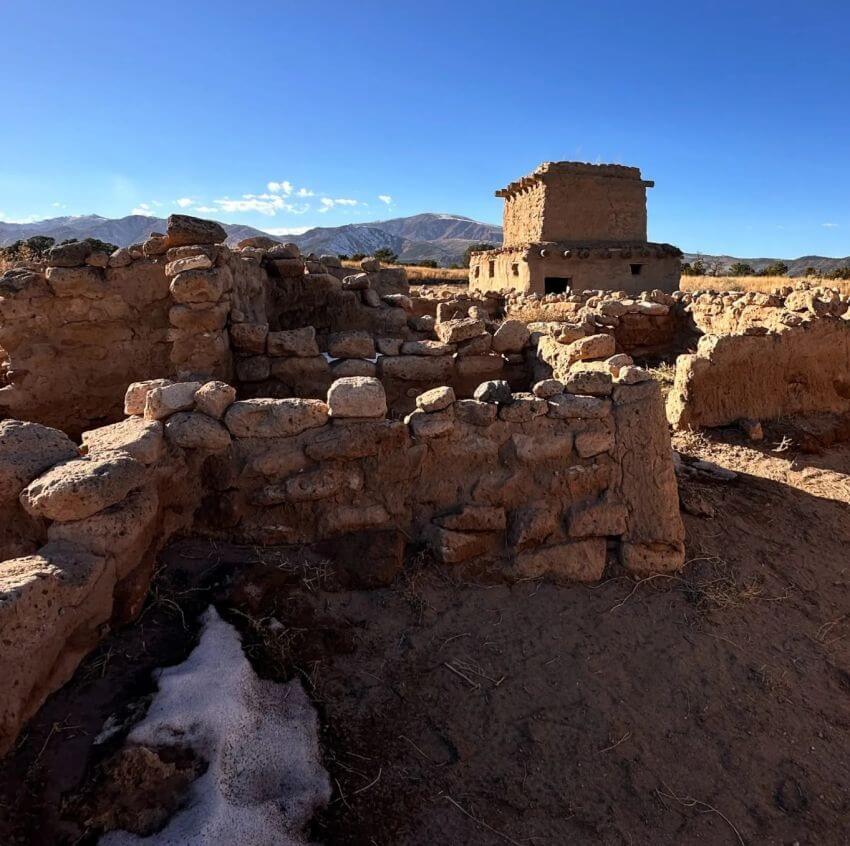
On the way back to Santa Fe we stopped to see the Puye Cliffs which was home to 1,500 Pueblo indians. They lived there from the 900s to the 1580s AD. These were not nomadic people. At this settlement they had water and a place to grow food. They were also well protected from enemies with their position on the top of the mesa.
It is thought they abandoned this location because their water source dried up. They moved into the Rio Grande River Valley and are ancestors of today’s Santa Clara people. The Santa Clara Pueblo is ten miles east of Puye Cliff Dwellings. The Pajarito Plateau is made up of layers of basalt and volcanic tuff created by eruptions of the Jemez Caldera volcano. I’ve seen where people lived in caves in the same kind of rock in France, Italy, and Spain.
Beginning in the late 900s, the upland mesas flanking the east side of the Jemez Mountains were settled by ancestral native peoples. At first, they gathered into hundreds of separate family-size dwellings. By 1300 A.D., they were converging into a few principal villages of increasing size.
Such villages included Puye, Tsankawi, Tyuonyi, Otowi, Shufinne and Tsirege. The word “tsirege” means “little bird” in the ancestral Tewa language.
Puye Cliffs comprises two levels of cliff and cave dwellings cut into the cliff face, as well as dwellings on the mesa top. Over one mile long, the first level runs the length of the base of the mesa. The second level is about 2,100 feet long. Paths and stairways were cut into the face of the rock to connect the two levels and allow people to climb to the top of the mesa.
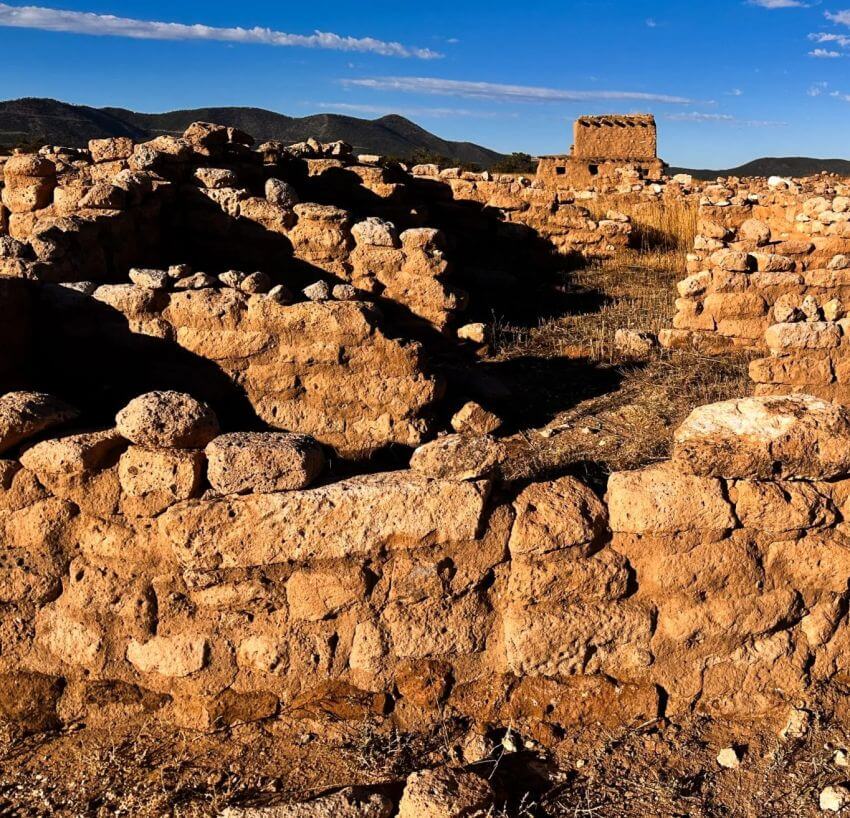
We rode to the top of the mesa and had the opportunity to climb down, the climb would have included a big ladder — we declined! Maybe if I were younger and had better shoes on I might have tried it. The excavation of the ruins finally stopped when bones were found in one of the dwellings.
All the employees at the Cliff Dwellings are members of the tribe whose ancestors lived there.
Back to Canyon Road
We made it back to Canyon Road just before closing. We got to visit what turned out to be my favorite gallery, Giacobbe-Fritz Fine Art, where I spent my next house payment! They were just opening a show with artists Peggy McGivern and Geoffrey Gorman. I loved pretty much everything in the gallery, it was very light, with a lot of whimsy.
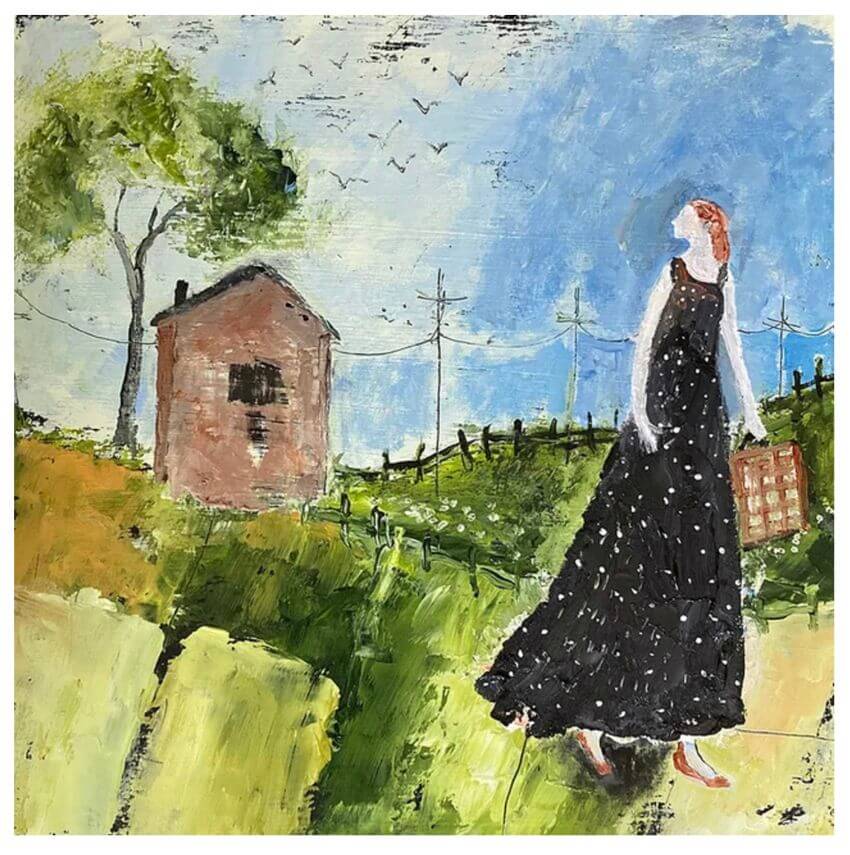
I purchased the painting on the left called “Runaways.” It kind of goes with another painting I already owned on the right called “Taking Leave in Dotted Swiss.” They really speak to me because I see myself running away from home or taking leave, a lot these days.
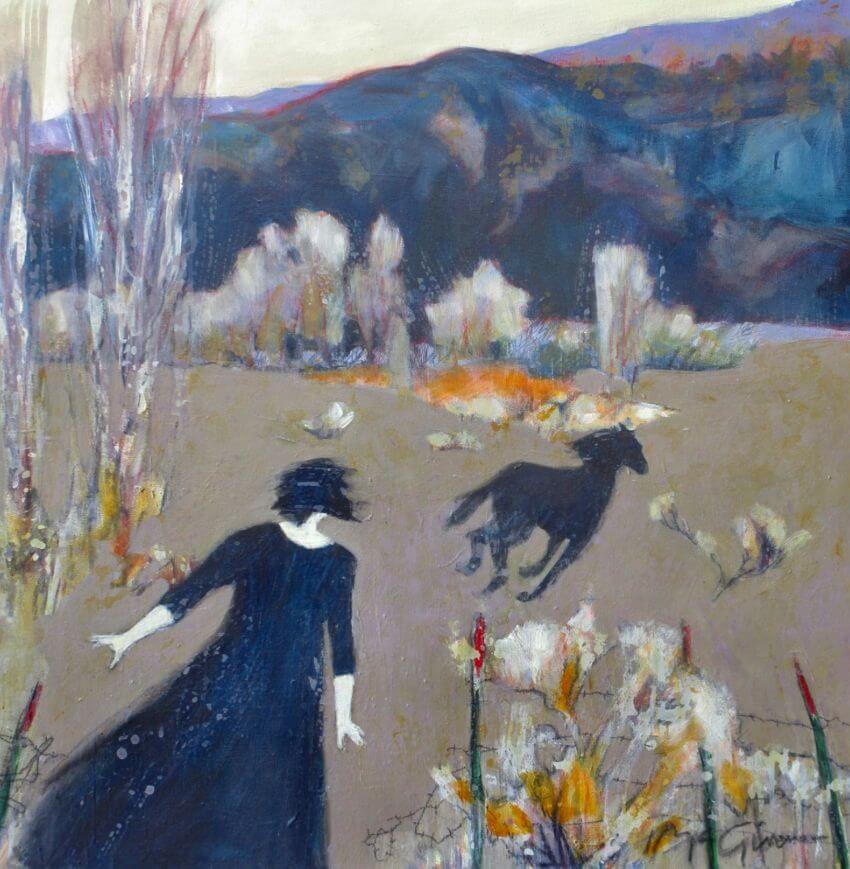
The artist said about the painting: “Amazing that ‘Runaway'”was my first piece for the show that is up right now. Victoria, the manager at Giacobbe Fritz, almost bought it herself. I love that it has a mysterious feel to it and my love of horses came out beautifully.
I based the rest of the show on that mysterious feeling. It was a quick snapshot of a wild horse near San Luis, Colorado. The ‘Story’ came to me when I added the woman in the foreground.”
We also saw several artists whose work I’m familiar with including the origami inspired sculptures by Kevin Box. Right after Hurricane Florence I saw his work at the Botanical garden in Richmond. He and his wife do a traveling exhibit called “Origami in the Garden.” They have several coming up in different parts of the country.


I found a piece I would love to have for my space (the one on the right). Granted, I have plenty of room in my yard for a big one but maybe I’ll go on another trip instead.
A little history about the Road: Some of the first artists to settle Canyon Road came to Santa Fe to be treated for tuberculosis.
At the end of the Second World War, the Canyon Road neighborhood was still rural and many descendants of the original Spanish farmers still lived there. They mingled with the artists, writers and musicians, most from the NY art world.
Along the lower half-mile restaurants, bars, grocery stores, barber shop, dry-cleaner, pet supplies, photo studio, sprung up. In 1962 Santa Fe designated the Road a “residential arts and crafts zone,” and by the 1980s fine art galleries dominated Canyon Road.
Canyon Road now is home to more than 125 galleries, boutiques, and restaurants in the space of six short city blocks. S nta Fe is the second-largest art market in the country, and the Canyon Road district includes more than half of the city’s total number of art retailers. The diversity of work shown by these galleries includes nearly every type of American art.
Chamayo and the High Road to Taos
We left for Taos and drove the High Road to Taos, not really knowing what we would encounter. Our first stop was in Chamayo, one of our favorite stops of the trip. This is a tiny town, the historic part looks like its probably looked for the last 100 years.
It is most famous for El Santuario de Chimayo. Long story shortish, Chimayo is a pilgrimage site and the dirt is supposed to have healing properties, although the Catholic Church does not officially support the claim. This doesn’t prevent over 300,000 people a year coming to this tiny town in search of healing.
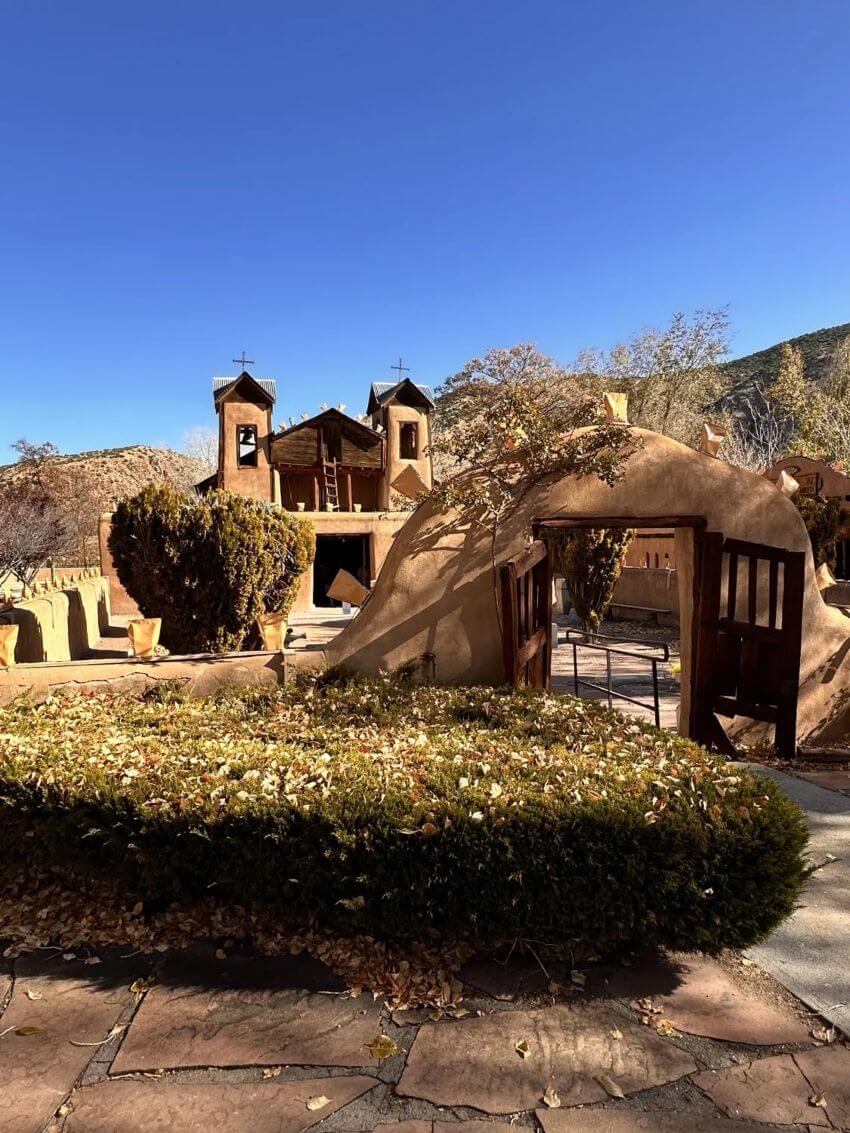
Don Bernardo Abeyta, a member of a local Catholic brotherhood, followed a mysterious dancing light down to the river. The light appeared to be coming out of the dirt itself, so he began digging, and uncovered a six-foot-tall wooden crucifix.
Abeyta and others carried the heavy statue to the parish church in Santa Cruz, eight miles away. They left the crucifix at the altar. Except the next morning it was gone.
When they looked for it, they found it back in the same spot on the riverbank. A second time it was brought to the church — and a second time it mysteriously migrated back to its spot of origin.
When this happened a third time, the diocese got the message and a small chapel was built in Chimayó to house the statue. Or so the story goes.
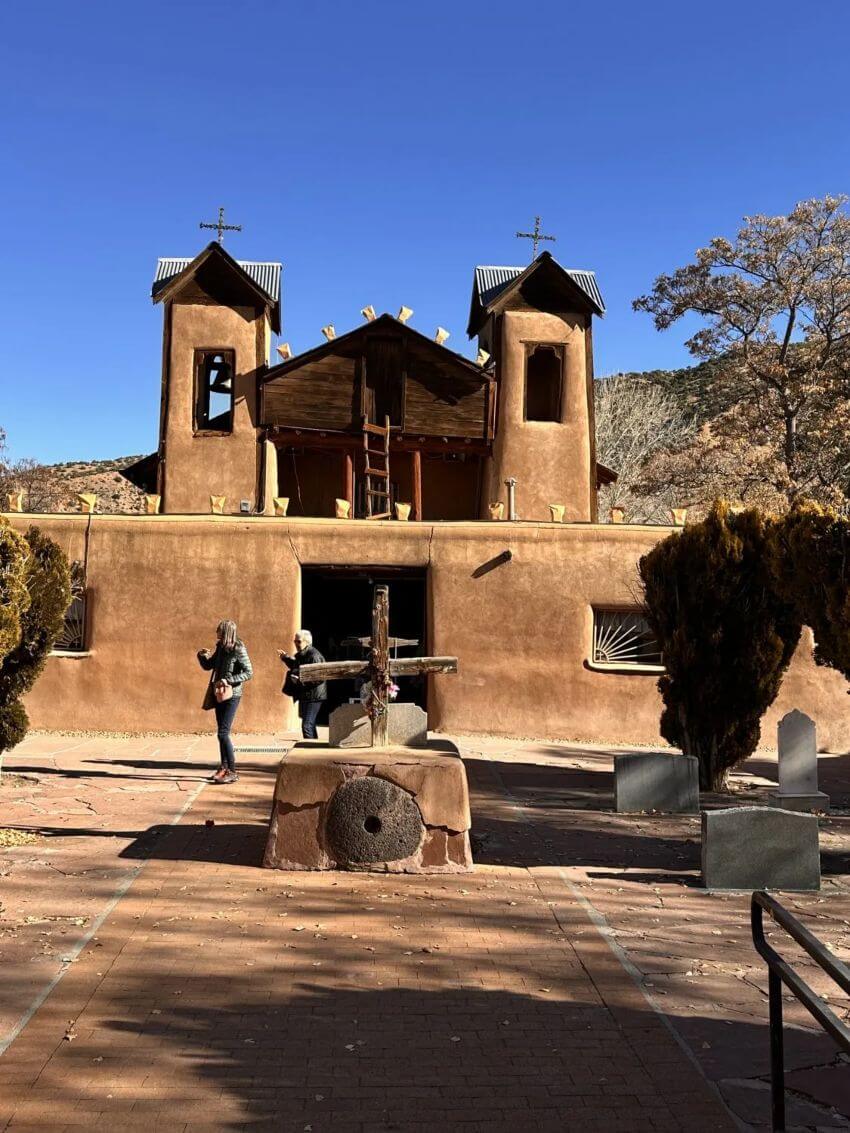
It is said that during WWI, terrified New Mexican boys huddled in the trenches and made a prayerful promise that if they returned alive, they would make a pilgrimage of gratitude to Chimayó.
Since then, through the second World War, the Korean War, Vietnam, Iraq and Afghanistan, servicemen and women and their frightened families have come to Chimayó to pray for — and give thanks for — their safe return.
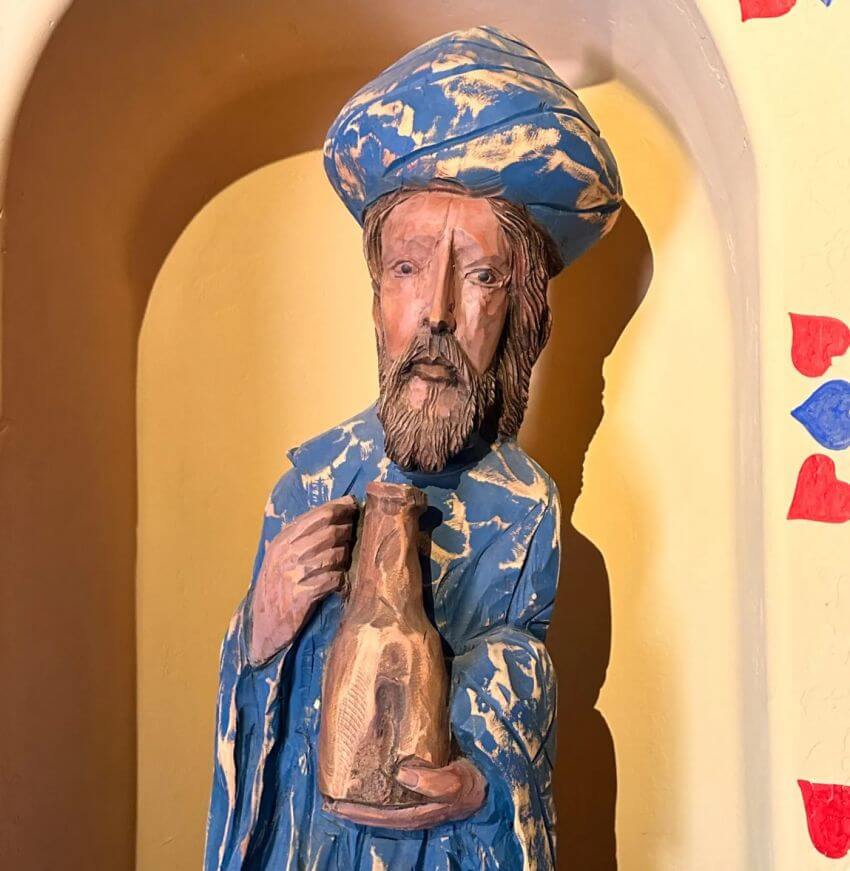
The interior of the church is decorated with hand carved and hand painted wood saints and the altar is amazing. Photos are not allowed on the interior but there a few photos online.


In addition to this shrine there are two more in the town.


This is where I started seeing Santos that I loved and am inspired to try to make some in clay. We’ll see if that happens!
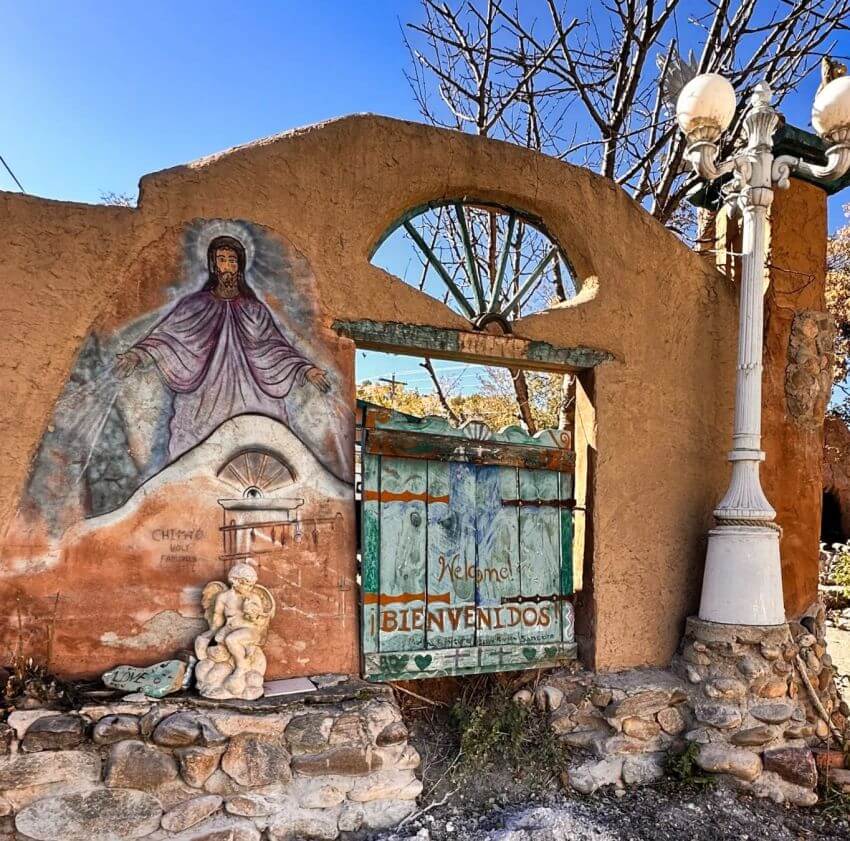
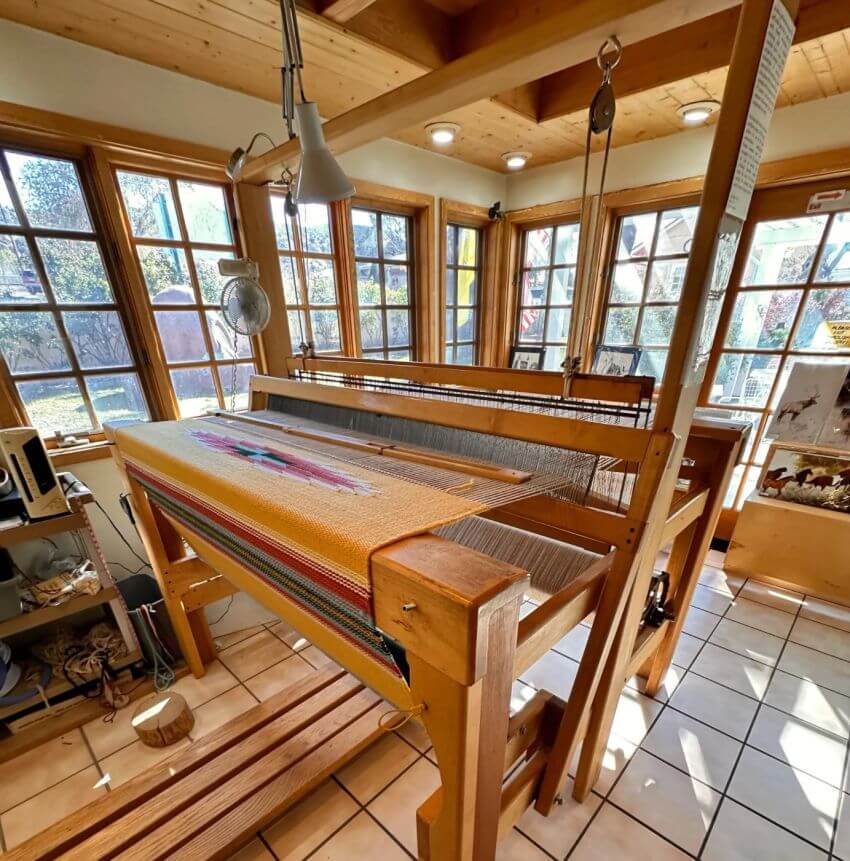
Just down the road is a large weaving shop and studio. The Ortega and Trujillo families have been weaving here for several generations.


Santo Nino Chapel was constructed with children in mind because it was created to commemorate the child Jesus. The adjacent chapel is lined with baby shoes that are left to ensure that the child Jesus has new shoes as he travels to bring comfort to the world.
Taos Shops and Galleries
We made it to Taos in time to visit a few shops and galleries.


As you probably know, Taos is a lot funkier than Santa Fe.


We visited the Taos Ceramics Center where I had a nice conversation with the gallery director about their center. We talked about potters we both knew and the plans for the future of the Center.
The Center has an ongoing fundraiser to raise money for the artists community in Asheville. They have already sent $10,000 to CERF to give as grants to those that need it.


One of the more unusual things we did in Taos was to see the banned paintings by DH Lawrence. For years they hung in a back office of the Hotel La Fonda de Taos. Those forbidden paintings now hang behind a curtain in the hotel’s conference room. You have to ask to see them and pay $5!
Lawrence painted them during the height of his infamy following the publication of his erotic novel, Lady Chatterley’s Lover. The nine works were among the twelve originally exhibited at the Dorothy Warren Gallery of London in 1929. They were soon confiscated and labeled obscene.
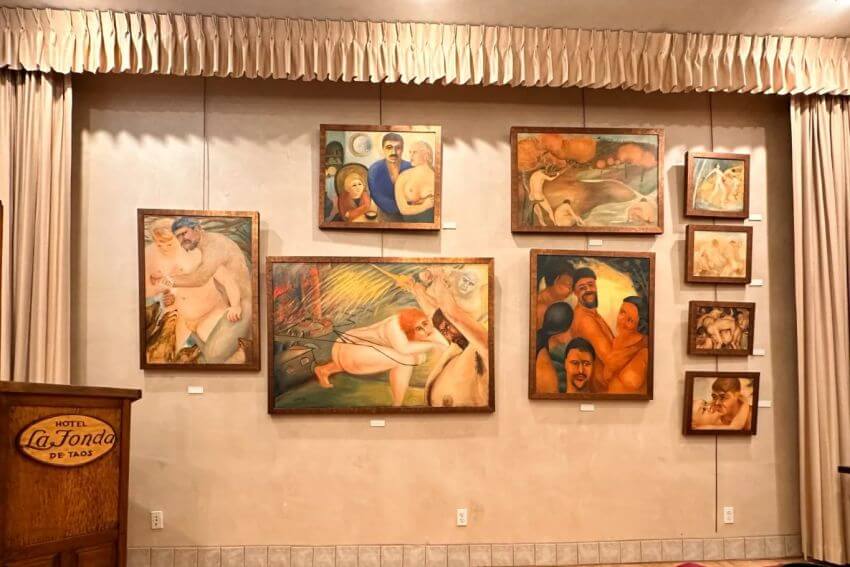
Lawrence was offered two choices: remove the paintings from England forever or have them destroyed. He chose to remove them and send them to his home in Vence, France. They stayed there until his death in 1930. His widow Frieda moved to New Mexico where she and DH had lived on a 160-acre ranch off and on. He obtained the ranch in a swap for the manuscript of Sons and Lovers.
After Frieda’s death the paintings were sold to the local owner of the Hotel La Fonda de Taos.
You never know what you are going to run across in your travels.
Last Day – Taos Pueblo


The people of Taos Pueblo have a detailed oral history which is not divulged due to religious privacy. The ancestors of the Taos people lived in this valley long before Columbus discovered America and hundreds of years before Europe emerged from the Dark Ages.
Ancient ruins in the Taos Valley indicate that their people lived there over 1000 years ago. The main part of the present buildings were most likely constructed between 1000 and 1450 A.D. and appeared much as they do today.
There are two main structures in the Pueblo called Hlauuma (north house) and Hlaukwima (south house) and are considered to be the oldest continuously inhabited communities in the USA.
About 150 people live there full time now, with no electricity or running water. They use gas for cooking and lighting.
Our guide, Summer, talked a lot about their religion being dual, Catholic and their ancient Indian religious rites. Many wars were fought in the area with the Spaniards, the Mexicans, other Indian tribes, and the Civil War.
The single most dramatic event in the recent history of Taos Pueblo land is the 1970 return of 48,000 acres of mountain land including the sacred Blue Lake.
It was taken by the U.S. Government in 1906 to become part of the National Forest lands. Among the ritual sites where Taos people go for ceremonial reasons, Blue Lake is perhaps the most important. Its return is a tribute to the tenacity of Pueblo leaders and to the community’s commitment to guarding its lands for the spiritual, cultural and economic health of the Pueblo. The return of this land capped a long history of struggle.
This return happened under the Nixon administration.


Tiwa is the native language but English and Spanish are also spoken. There is no written language but there are people today that are teaching the young, hoping to keep the language alive.


Millicent Rogers Museum
The Millicent Rogers Museum is a collection of Native American jewelry, pottery, weavings, as well as Hispanic folk art, blankets, and baskets.
The museum was named for Millicent Rogers who came to Taos following a breakup with movie legend Clark Gable. She collected Native American jewelry and rugs during her time in Taos. When she died, her youngest son created the museum to honor their mother’s interests.


Mary Millicent Abigail Rogers, February 1, 1902 – January 1, 1953 was better known as Millicent Rogers. She was a socialite, heiress, fashion icon, jewelry designer, and art collector.
She was the granddaughter of Standard Oil tycoon Henry Huttleston Rogers. She was also an early supporter and enthusiast of Southwestern style art. Millicent is often credited for this type of art reaching a national and international audience. Later in life, she became an activist. She was one of the first celebrities to champion the cause of Native American civil rights.
Alas, it was time to head toward Albuquerque… but we had one more stop.


Madrid
Just before we got to Madrid we passed the Box home and studio, the artist whose work we saw in Santa Fe.


I might add that Madrid is a funky old hippy town, and I like it!
Lead and coal mines in the area around Madrid captured the interest of Roque Madrid in the 17th century. Was the town named for Roque or for Madrid, Spain? No one knows. The railroad arrived and Madrid was a company town from 1895 until it was finally incorporated in the late 1940s.
After the mines closed around 1954 the town became a ghost town.
That is until the artists and hippies arrived and turned it into the cool little town it is today.


What a great trip! Where to next? A few days in Virginia Beach followed by NYC to see the Christmas decorations.
Jan, thank you for the blog! I have always wanted to take this trip but still have it on my bucket list! I love your photos and stories at each site! Maybe I’ll get there someday!
Karen
Thank you Karen! I too hope you get to go. The landscape is so different and the history of the Native Americans so long. And so much art! Very inspirational.
Wonderful travelogue of New Mexico; you present a very appealing convergence of the primordial land, its native peoples and the art which they create.
Have visited Santa Fe and the region several times and am always struck by the strong presence of native ancestor spirits who speak thru contemporary people and places.
Thank you Catherine! Its what I love about traveling. Learning about different cultures and how it manifests in what they create.